It’s one of the most common questions we hear from customers preparing for a cross-country move: "Can I save on moving costs by loading up my trunk and backseat with personal belongings before the car hauler arrives?"
While treating your car like a rolling moving box seems efficient, the auto transport industry is subject to strict federal laws, weight limitations, and insurance restrictions. The logistics team at ADL Logistics LLC has put together this guide to clarify what is legally allowed, what is risky, and how to safely pack your vehicle for shipping.
1. The Legal Reality: FMCSA Regulations & Household Goods
Auto transport carriers are licensed by the Federal Motor Carrier Safety Administration (FMCSA) specifically to haul vehicles, not household goods. Moving personal belongings inside a car blurs the line between auto shipping and household moving, which carries distinct legal and licensing requirements.
- Carrier Inspections: Transport trucks are subject to random inspections and weight checks at state weigh stations. If a carrier's trailer exceeds gross vehicle weight limits because individual cars are stuffed with heavy boxes, the driver can face heavy fines and severe delays.
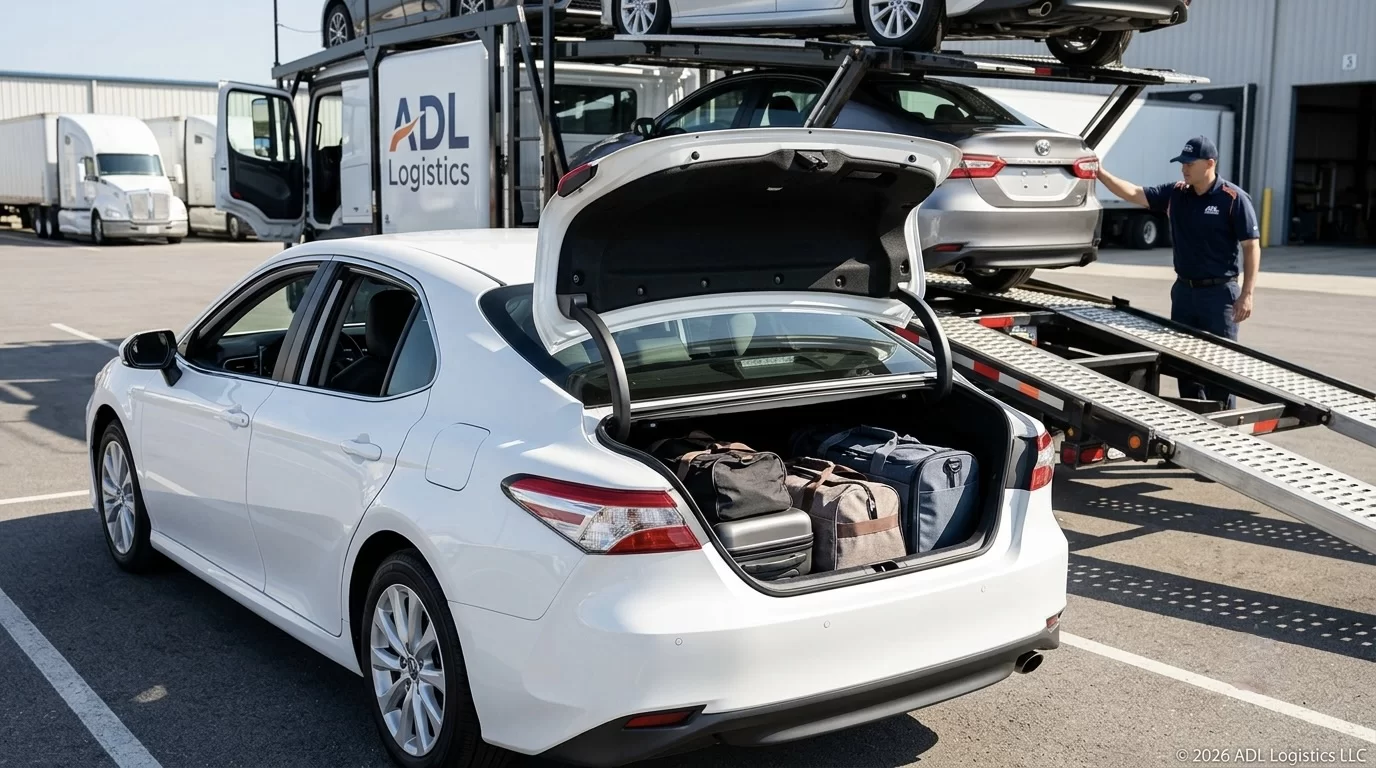
- The 100-Pound Rule: Most auto transport carriers conditionally allow up to 100 lbs of personal items, provided they are stored neatly in the trunk or below the window line in the backseat.
2. Insurance Policies Do Not Cover Cargo Inside the Vehicle
This is the single most important factor for vehicle owners to understand: a carrier's cargo insurance policy covers your vehicle, not the items inside it.
If loose luggage or personal items bounce around in transit and damage your interior leather, scratch a window, or tear headliners, insurance will not pay for those repairs. Furthermore, if your vehicle is broken into while parked at a rest stop or hotel overnight, stolen personal belongings are entirely un-insured by the carrier.
3. What You Can (and Cannot) Keep in the Car
To protect your vehicle, avoid carrier delays, and remain fully compliant with transport standards, stick to these packing boundaries:
- Allowed Items: Factory-installed spare tire, jack, emergency roadside kits, standard vehicle documentation (glove box items), and light, essential items safely stored in the trunk under 100 lbs.
- Strictly Prohibited: Valuables (electronics, jewelry, cash), firearms, ammunition, hazardous or flammable materials (paint, extra gas cans), plants, perishable food, and anything that obstructs the driver's view out of the front, rear, or side windows.
4. Best Practices If You Must Leave Items in Your Trunk
If you take advantage of the allowable weight allowance in your trunk, follow these quick steps to safeguard your shipment:
- Secure Soft Luggage: Pack items in soft duffel bags or sturdy luggage rather than loose cardboard boxes that can collapse or shift.
- Keep Seats Clear: Ensure front seats and backseats remain completely clear so the driver can maneuver and load the car safely.
- Disclose Extra Weight: Inform your broker or coordinator ahead of time if your car will have extra cargo so the driver can factor it into their axle weight calculations.
Ship Smart with ADL Logistics
Navigating the rules of auto transport doesn't have to be confusing. At ADL Logistics LLC, we believe in complete transparency so you can prepare your vehicle with total confidence.
Have questions about prepping your vehicle for an upcoming move? Contact our dedicated vehicle shipping specialists today or use our simple online platform to get a fast, accurate quote.
Written by
ADL Logistics Team
ADL Logistics — Auto Transport Specialists
Published
Jul 30, 2026
2 months ago